

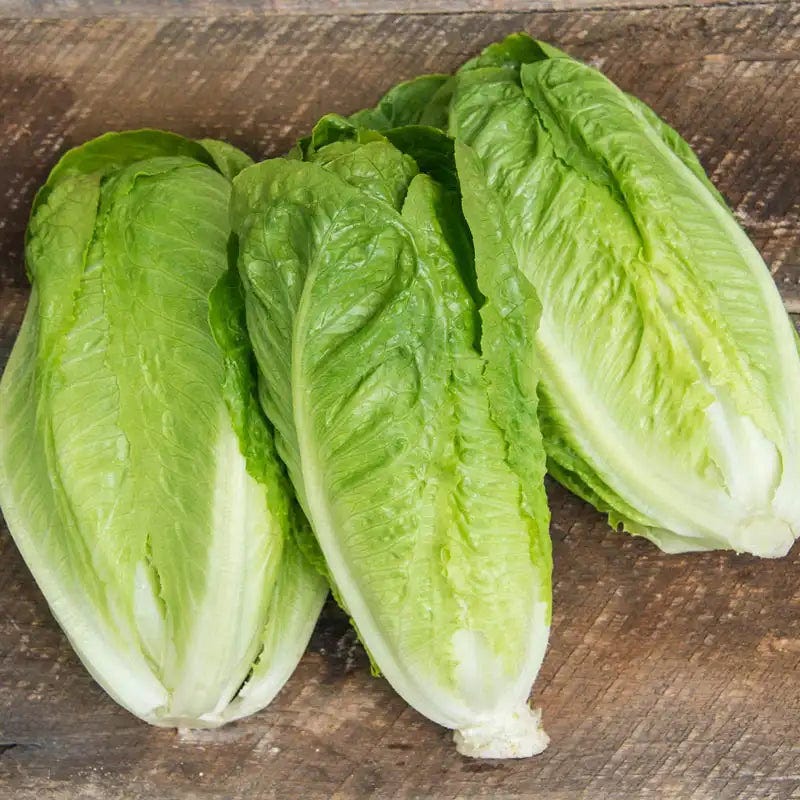
For much of this summer, I was unusually cautious about lettuce.
And I had good reason to be.
The United States has experienced an extraordinary year for Cyclospora, a microscopic parasite that can contaminate fresh produce and cause weeks of watery diarrhea, fatigue, appetite loss, bloating, and weight loss.
As of late August, CDC had received reports of more than 17,000 laboratory-confirmed domestically acquired cases of cyclosporiasis in 2026, compared with 1,180 during the comparable May-through-August period in 2025.
A huge portion of this year’s burden has been associated with a multistate outbreak linked to iceberg lettuce sourced from central Mexico. As of August 27, FDA reported 11,458 illnesses, 495 hospitalizations, and two deaths associated with that outbreak.
So when people asked me this summer whether I was eating lettuce, my answer was often: not much.
However, September is here and I’m eating lettuce again.
That doesn’t mean Cyclospora magically disappears on September 1. It doesn’t mean lettuce has suddenly become incapable of carrying foodborne illness, and it certainly doesn’t mean we should stop paying attention to outbreaks and recalls.
It means something more nuanced and, I think, much more useful:
Food safety risk changes with the seasons.
The moment it clicked for me
I was recently in Northern California and noticed something that probably wouldn’t have meant much to me a few months ago.
Lettuce was growing.
Fields of it.
It reminded me of something that’s easy to forget when we walk into a grocery store in 2026: produce does not come from a single place all year long.
The bag of lettuce you buy in July may come from a completely different growing region than the bag you buy in October.
Agricultural production moves.
Harvests and supply chains move.
Weather and water sources change.
Thus, the pattern of foodborne-disease risk changes too.
Our supermarkets give us the illusion that food has no season. Strawberries are available in January. Lettuce is available in February. Tomatoes are available in December.
Somewhere, those foods are still being grown and where they are being grown matters.
Cyclospora is remarkably seasonal
This is one of the most important things to understand about Cyclospora.
CDC actually defines the traditional U.S. cyclosporiasis season as May 1 through August 31. Cases typically rise during the spring and summer and then decline. CDC notes that clusters can occur outside that window, so September isn’t some biological force field against the parasite, but the seasonality is remarkably consistent.
The FDA similarly notes that domestically acquired cases tend to occur between May and August.
Why?
There probably isn’t one simple explanation.
Cyclospora needs very particular environmental conditions. Unlike many gastrointestinal infections, it isn’t usually transmitted directly from one sick person to another. The parasite is shed in feces but must spend time in the environment before becoming infectious.
Contamination therefore tends to happen somewhere along the food-and-water pathway. That means agricultural conditions matter. Water, temperature and rainfall may matter. Sanitation definitely matters.
The particular crops being harvested matter.
And critically, the geographic source of our produce changes throughout the year.
So the risk isn’t simply: Lettuce = Cyclospora.
It is much closer to:
A particular food, grown in a particular place, under particular environmental conditions, passing through a particular supply chain at a particular time can become contaminated.
That’s a very different way to think about food safety.
This summer’s lettuce outbreak is a good example
The massive 2026 outbreak was traced through epidemiologic and supply-chain evidence to processed iceberg lettuce sourced from central Mexico.
Taylor Farms de Mexico recalled iceberg lettuce from that region on July 17. FDA says the recalled products’ best-by dates have now passed, and those products should no longer be available in stores or restaurants.
That distinction matters because the warning was never: All lettuce everywhere is dangerous indefinitely. It was about a specific outbreak involving a specific product and supply chain. When the contaminated product leaves the food supply, your personal risk changes.
As the growing season changes and lettuce production shifts between agricultural regions, the context changes again. That was what struck me seeing lettuce growing in Northern California. The lettuce in front of me wasn’t necessarily coming from the same place as the lettuce implicated earlier this summer. This means a potentially very different risk.
September doesn’t mean “all clear”
I want to emphasize this because it’s very easy to turn epidemiology into an arbitrary calendar rule.
The fact that CDC’s traditional Cyclospora surveillance season ends August 31 does NOT mean infections cannot happen in September.
They can, and the CDC explicitly says clusters have occurred outside the traditional May-through-August window. There’s also a delay between eating contaminated food, developing symptoms, getting tested, being reported to a health department, and ultimately appearing in CDC statistics. The CDC says recent illnesses may take about six weeks to make their way into national surveillance data.
The 2026 iceberg-lettuce investigation remains open, so I wouldn’t interpret September 1 as some kind of food-safety reset. Instead, think of it as a changing risk curve.
This is how I want people to think about recalls
One of the unintended consequences of covering foodborne outbreaks is that people can become afraid of entire categories of nutritious foods.
A spinach recall becomes: “Spinach is dangerous.”
A cucumber outbreak becomes: “I don’t eat cucumbers anymore.”
An iceberg-lettuce outbreak becomes: “I’m done with salads.”
That’s usually not what the evidence supports. Food recalls are generally targeted interventions. They tell us something specific:
a particular product,
from a particular producer or processor,
sometimes from a particular growing region,
distributed during a particular period,
may pose an increased risk.
Those details matter enormously. The appropriate reaction isn’t to ignore recalls, but it also isn’t to permanently eliminate every food that’s ever appeared in one.
Imagine applying that standard consistently. We’d eventually stop eating lettuce, spinach, cucumbers, onions, melons, sprouts, eggs, cheese, peanut butter, frozen fruit, flour and half the grocery store.
This creates its own health problem: Vegetables are still incredibly good for you!
One foodborne illness outbreak doesn’t erase decades of nutrition evidence. Diets rich in vegetables, fruits, whole grains, legumes, nuts and other minimally processed foods are consistently associated with better long-term health.
When we communicate about food safety, we need to hold two ideas in our heads at the same time:
Foodborne illness is real and sometimes serious.
And:
We should not scare people away from nutritious foods unnecessarily.
Those statements aren’t contradictory. They are what evidence-based risk communication looks like.
What I’m doing now
I’m eating salads again, I’m washing produce appropriately under clean running water, and I’m continuing to pay attention to FDA and CDC outbreak notices.
I’m not washing lettuce with bleach or using soap on my vegetables. Also, I’m not assuming rinsing makes contaminated produce completely safe. The FDA specifically notes that rinsing is appropriate but may not reliably remove Cyclospora.
Most importantly, I’m not treating every head of lettuce as though it came from the same farm, during the same season, under the same circumstances as the lettuce involved in this summer’s outbreak. That’s not how our food system works.
The lesson is bigger than lettuce
This is really a lesson about how to think about health risk.
People understandably want binary answers:
Safe or dangerous.
Eat it or don’t eat it.
Worry or don’t worry.
However, medicine rarely works that way. Risk changes with circumstances. A disease can be seasonal. A food supply can shift geographically. An outbreak can begin, peak, and end. New evidence can change what the most reasonable decision is today compared with what it was two months ago.
This is exactly what I mean when I talk about thinking like a doctor.
Doctors are constantly making decisions with incomplete information. We look at the evidence in front of us, estimate risk, consider what has changed, and then update our recommendations when new information comes in. That doesn’t mean being indecisive. It means being willing to change your mind when the facts change.
This summer, the evidence gave me good reason to be more cautious about lettuce. Now that the growing season is changing, the implicated products are no longer on store shelves, and the epidemiology is changing too. Therefore, my behavior is changing.
That process of understanding relative risk, resisting all-or-nothing thinking, and knowing when new evidence should actually change what you do, is one of the reasons I wrote my upcoming book, Think Like a Doctor.
Because you shouldn’t need a medical degree to ask better questions about your health. When you see a frightening headline, a new study, a recall, or someone online telling you that a food, medication, vaccine, or everyday behavior is “dangerous,” I want you to be able to ask:
How big is the risk?
Who does this actually apply to?
What has changed?
Does this information warrant changing what I do?
Those questions are much more useful than simply asking whether something is “good” or “bad.” The goal isn’t to eliminate every conceivable risk from your life. It’s to recognize meaningful risk, respond proportionately, and update your decisions when the evidence changes. This summer, that meant being cautious about lettuce. Now, it means I’m eating it again.
That’s not inconsistency.
That’s thinking like a doctor.
Although not required, any support is greatly appreciated, including supporting my books.
You and your spouse are my CDC.
I've been eating lettuce, but it hasn't come from a store (which sucks, because I like Taylor Farms salad kits). I joined a CSA this year (Community Supported Agriculture - pay for a share and get produce all summer) through my local botanic garden, and I trust their gardeners. It's local, very fresh, and nowhere near the supply line that had the issue.